
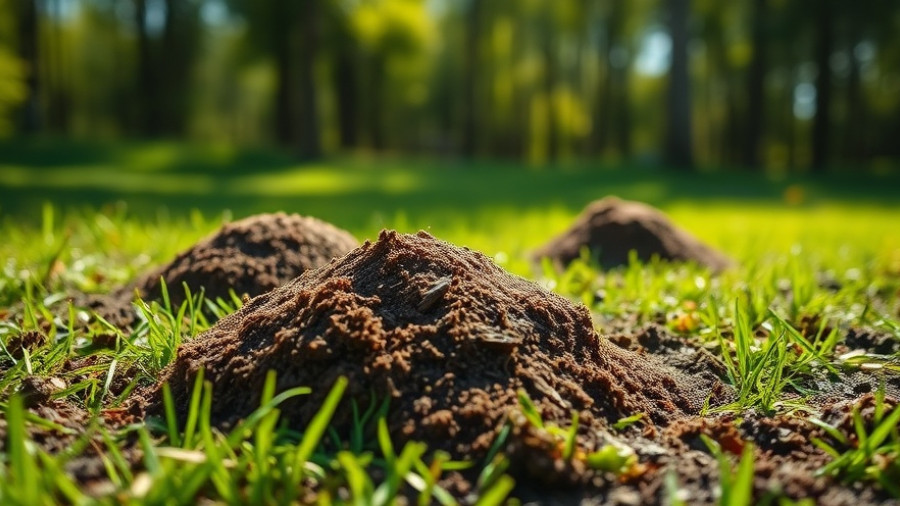
Understanding Mole Damage in Your Yard
Moles may be small, but they can create significant turmoil beneath the surface of your yard. Their unique burrowing habits allow them to excavate around 100 feet of tunnels each day, leading many homeowners to believe that they have an infestation when it might just be one creature at work. Recognizing the signs early can help mitigate further damage. Signs of mole activity typically include raised ridges, soft soil, molehills, and patches of dead grass.
How to Assess the Damage Correctly
Before acting, assess the extent of the damage to understand how best to repair it. Look for signs of mole activity such as:
- Raised soil ridges that indicate tunneling
- Molehills, which are small mounds of dirt
- Soft and spongy soil caused by hollow tunnels below
- Patches of dead grass where roots may have been disturbed
Once you've identified the signs, it’s essential to act quickly. A delayed response may mean increased damage as moles continue to burrow.
Step-by-Step Repair Process
Here are the effective steps to repair the damage:
1. Press Down the Raised Tunnels
Using a shovel, gently press down any raised soil ridges. This should be done right after you spot them for minimal damage to your grass. The key here is to ensure that the grass stays healthy and does not dry out.
2. Rake Down Mole Mounds
Carefully rake down molehills to flatten them back into the yard. If they’re still fresh, the grass underneath should not be harmed significantly.
3. Water the Flattened Areas
After flattening the mounds and tunnels, give the areas a good watering. This helps compact the soil and sets the stage for new growth.
4. Overseed or Lay Sod
If you have patches of dead grass, consider overseeding those areas. First, remove any dead grass and debris, then lightly aerate the soil before applying seeds. In severe cases where large areas are affected, laying sod may be a better option. Consider consulting local lawn care professionals, especially if you require extensive repairs.
5. Add Fertilizer or Compost
Enhance recovery by applying a nitrogen-rich fertilizer or compost to encourage growth. It's crucial to keep the soil moist but not drenched, facilitating better seed germination.
6. Maintain the Lawn
Water newly seeded areas lightly but frequently, especially as they begin to germinate. Monitor for signs of growth and resume regular maintenance once the grass reaches a height comparable to your existing lawn.
Preventing Future Mole Damage
While it’s essential to address existing damage, prevention is key to dealing with future mole problems. Here are some tips:
- Maintain a healthy lawn: A robust lawn will make it less appealing for moles.
- Adjust irrigation levels: Overwatering can attract earthworms, a primary food source for moles. Consider slightly reducing your lawn's water supply.
- Use natural repellents like castor oil around identified activity areas, which can deter moles from staying in your yard.
Seeking Professional Help
Sometimes, despite our best efforts, the damage may be too extensive for a DIY approach. Seeking professional assistance can ensure your lawn gets the care it needs and may include services for aeration, overseeding, and pest control. If you’re unsure of how to handle the situation alone, consider reaching out to experienced lawn care companies.
Final Thoughts
Ensuring your lawn remains beautiful and healthy is a significant commitment. By understanding how to diagnose and repair mole damage efficiently, you can help maintain your property’s appearance and functionality. However, don't hesitate to seek help when needed. A little investment in professional services can result in a remarkably healthier lawn.
Need a professional touch to your lawn care? Consider booking a pro service to help restore your yard after mole damage and give it a fresh start!





Write A Comment